
Services › Damp & water penetration
Damp Proofing & Water Penetration Repairs in North Devon
Finding out why the wall is wet, fixing the cause, then putting the plaster and render right. Over 30 years’ experience of damp proofing and tanking, from cellars to underground buildings.
Fix the cause, not just the stain
Damp patches, flaking paint and blown plaster usually have a cause you can find: water getting in through cracked render or failed pointing, leaking gutters and downpipes, ground levels that are too high against the wall, or condensation. Re-plastering without dealing with the cause just means doing the job twice.
We look at the whole wall – inside and out – and recommend repairs that suit how the building was built. There are two sides to damp proofing: traditional, breathable lime, and modern damp-proofing systems. The right one depends on the building.
Traditional, breathable damp proofing: lime renders and mortars
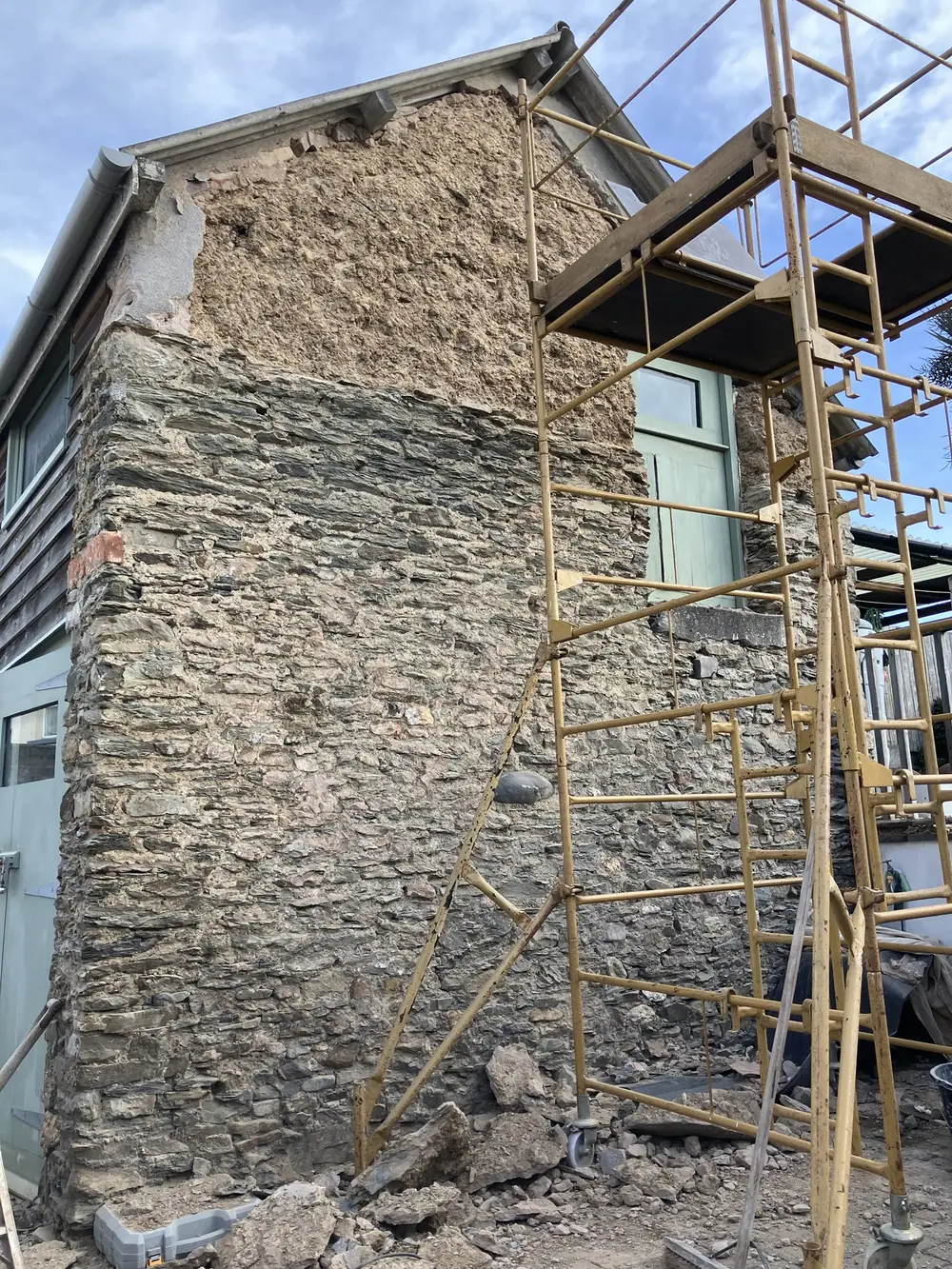
Older solid-wall and period properties – cob, stone and old brick – were built to let moisture in and out. When they are covered in sand and cement render or gypsum plaster, moisture gets trapped in the wall and shows up as damp. On these buildings the answer is often to remove the cement and use breathable lime renders and lime mortars, so the wall can dry out naturally.
Cement off, lime on
Removing cement render from older walls and replacing it with breathable lime.
Inside and out
Lime render outside and lime plaster inside.
Lime mortar repairs
Repairs to cob, stone and solid brick walls using lime mortars.
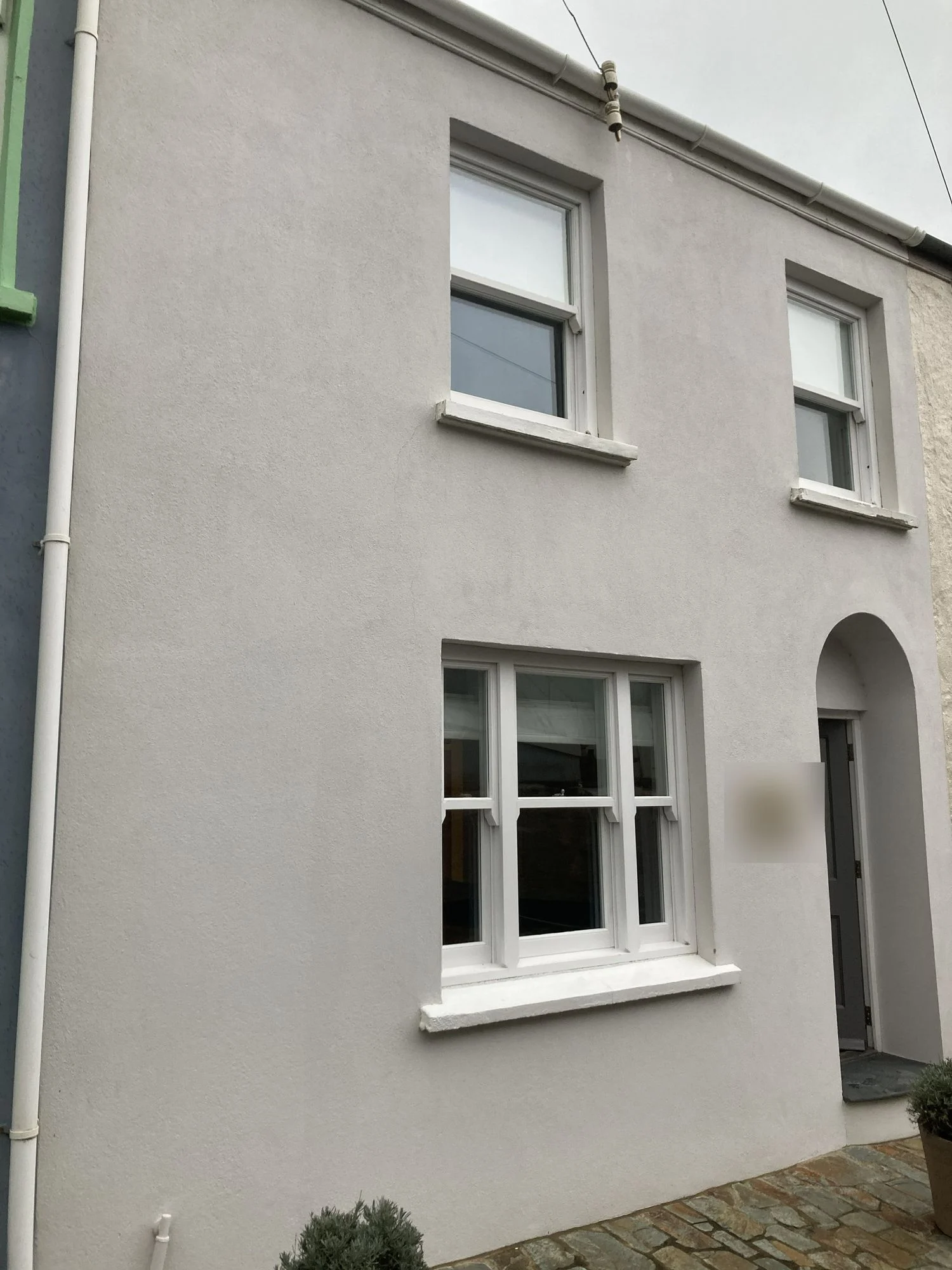
Example: an old railway cottage in Instow, where failed sand and cement was replaced with lime mortar inside and out, curing the damp. More about our lime and heritage work →
Modern damp proofing: injection, tanking and structural waterproofing
Where a wall has rising damp, or is below ground and holding back soil and water, modern damp-proofing systems are the right tool. We have over 30 years’ experience of damp proofing and tanking systems in basements, water table breaches, pumping stations and underground buildings.
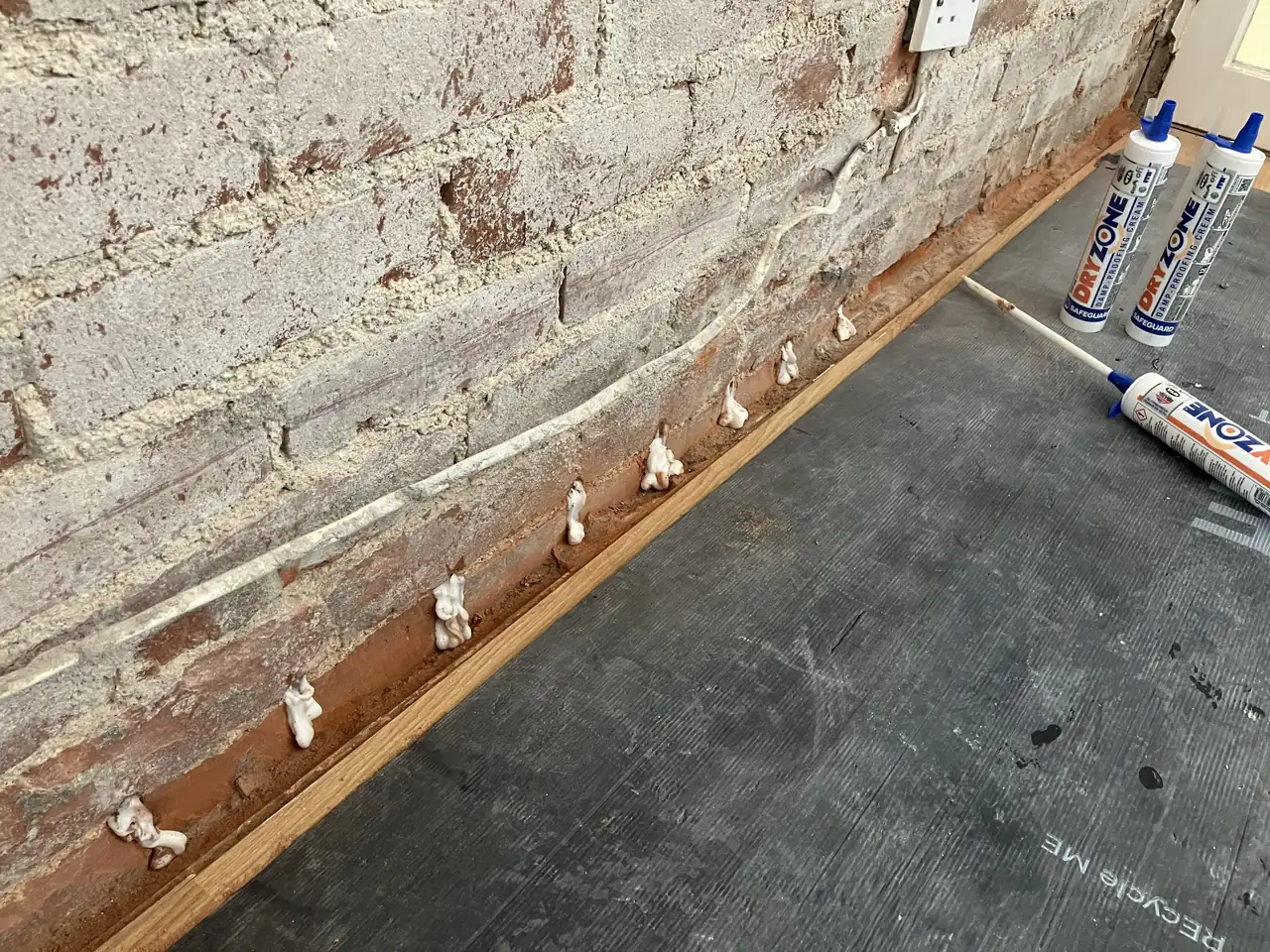
Silicone cream injection
An injected damp-proof course (DPC) to stop rising damp.
Tanking systems
A waterproof barrier applied to walls that are below ground.
Structural waterproofing
For basements, cellars, below-ground rooms and retaining walls.
Basement tanking & structural waterproofing
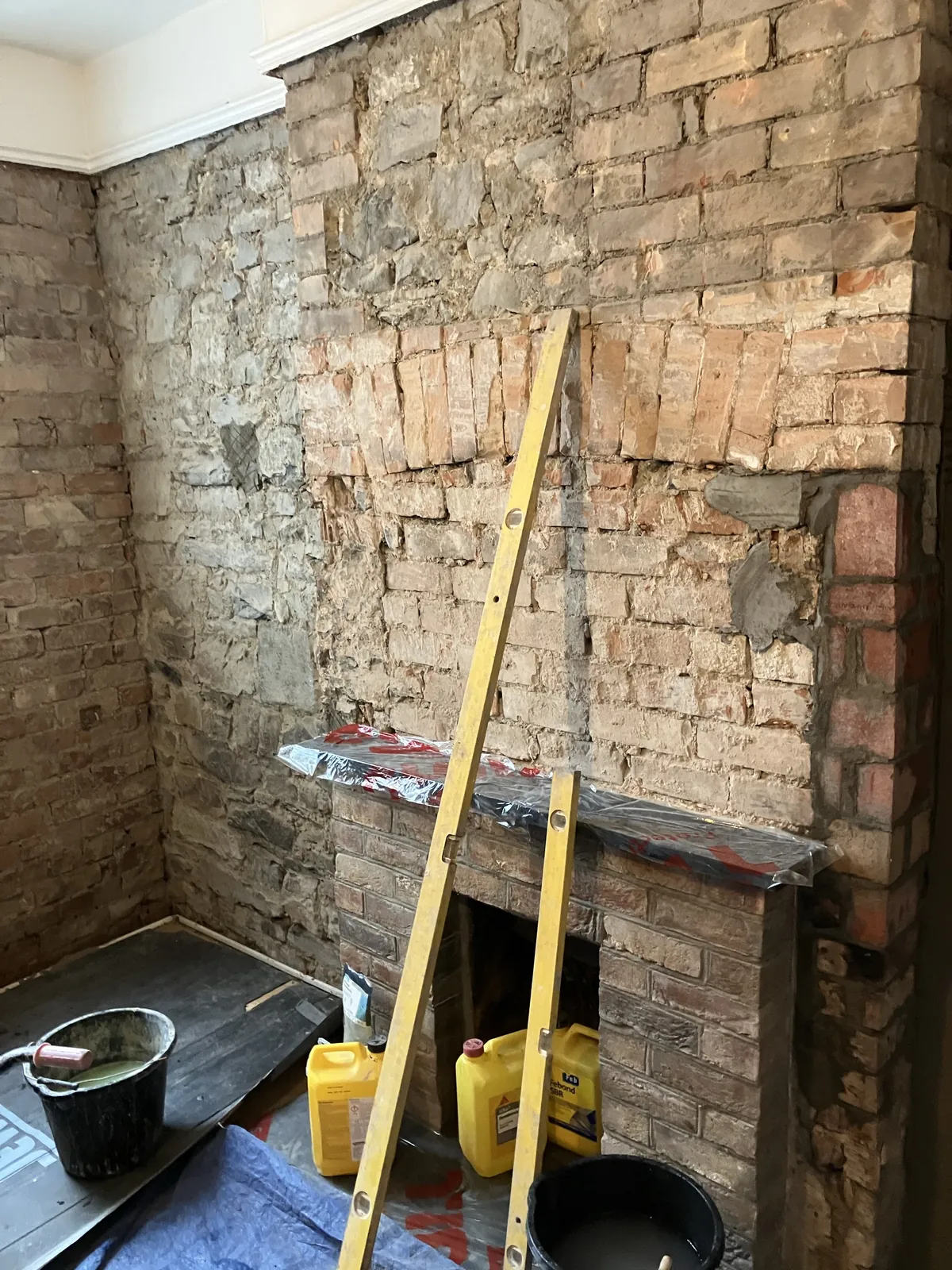
Basements, cellars and other below-ground rooms are pushed on by wet soil and, in places, a high water table. Tanking puts a continuous waterproof barrier on the walls (and often the floor) so water can’t come through, and structural waterproofing systems deal with water that is under pressure. We tank and waterproof cellars and basements in Barnstaple, Bideford and across North Devon and Devon, and have carried out this work on water table breaches, pumping stations and underground buildings.
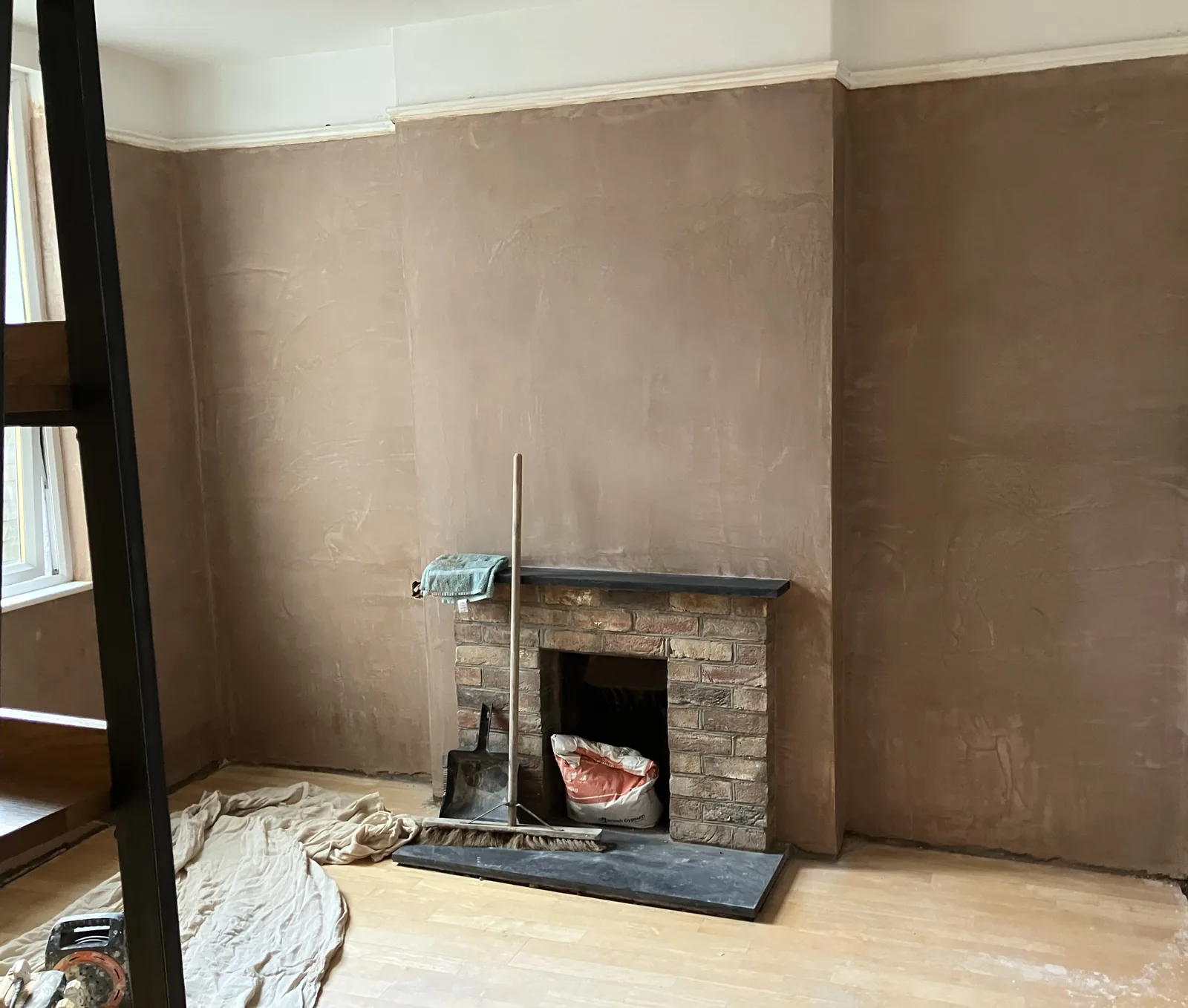
Before and after: cement slurry tanking, Victorian solid walls in Newport, Barnstaple
Salt inhibitors & waterproofers
When we replaster after a new damp-proof course, we use salt inhibitors and waterproofing additives in the new plaster. A wall that has had rising damp is often full of salts carried up by the water. Without these additives, the salts can come through and spoil the fresh plaster.
Example: rising damp on an internal wall in Bideford, treated with Dryzone silicone cream injection to form a new damp-proof course, then replastered inside with a salt inhibitor and waterproofer. Plastering & skimming
Which approach is right for my property?
It depends on the building’s age and how it was built. A period cottage with solid walls usually needs lime so it can breathe; a modern house with rising damp, or a cellar or retaining wall, may need injection or tanking. We’ll survey the property, find the cause and give you an honest recommendation.
Injection, tanking & waterproofing
For rising damp in modern walls, and for basements, cellars and retaining walls.
- Silicone cream injection DPC (Dryzone)
- Tanking and structural waterproofing
- Replastered with salt inhibitors and waterproofers
Breathable lime renders & mortars
For period cottages and solid cob, stone and old brick walls that need to breathe.
- Cement render removed
- Lime render outside, lime plaster inside
- Lime mortar repairs
Other ways we can help
Render repairs
Repairing or replacing cracked and blown render that lets water in.
Re-plastering
Hacking off damp-damaged plaster and re-plastering with suitable materials.
Honest advice
Advice on gutters, ground levels and ventilation that may be contributing.
Frequently asked questions
Is lime render better than cement for old houses?
For most older solid-wall houses, yes. Lime is breathable and flexible, so moisture can escape from the wall. Cement render is hard and much less breathable, so on an old wall it tends to trap moisture, which leads to damp and, over time, cracked and failing render.
What is tanking?
Tanking is a waterproof coating or system applied to walls that are below ground level, such as in basements, cellars and retaining walls, to stop water coming through from the soil behind. We have over 30 years’ experience of tanking and structural waterproofing in basements and cellars, water table breaches, pumping stations and underground buildings.
What is a silicone injection damp-proof course?
It is a treatment for rising damp. A silicone damp-proofing cream is injected into holes drilled along the mortar course, forming a new barrier that stops moisture rising up the wall.
Do I need lime or a modern damp-proofing system?
That depends on how your building was built and what is causing the damp. We’ll survey it and recommend what suits the property.
Book a free damp survey and quote
Tell Julian about the damp problem and where the property is in North Devon. Photos help a lot. Call 07881 688372 or 01271 314623, or send the details online.